



ALCAZAR Paris, a legendary venue

Long before the nights of ALCAZAR
The story of 62 rue Mazarine begins several centuries before the first feathers appeared.
In the 17th century, the site housed a jeu de paume, a place where people already came to be entertained, meet and be seen.
The building later took on another life, Liened to printing and the circulation of ideas.
The show had not yet taken the stage, but the venue already possessed what would come to define it: movement, sociability and a certain Parisian energy.
It would take until the 20th century for the story to become more nocturnal. And considerably more flamboyant.

1968: Jean-Marie Rivière awakens rue Mazarine
In 1968, Jean-Marie Rivière opened the doors of ALCAZAR Paris.
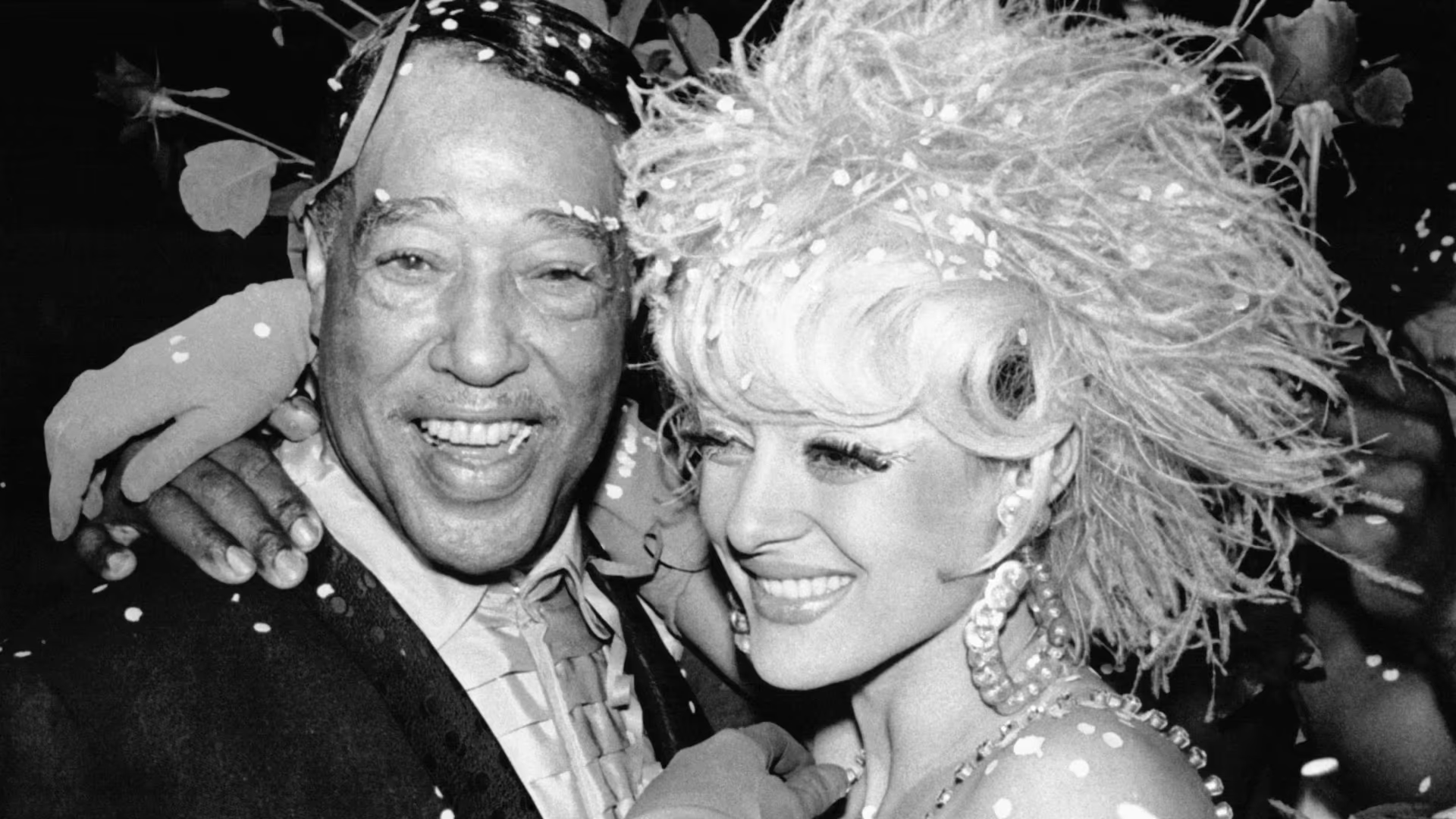
An actor, director and music-hall impresario with an instinctive sense of celebration, he was instantly recognisable in his white suits. But he did far more than produce shows: he created entire worlds, composed tableaux and turned every evening into an experience in which the guests themselves became part of the performance.
Under his direction, ALCAZAR broke away from the conventions of traditional cabaret.
The acts combined song, dance, humour, provocation and transformation. Costumes played with appearances. Artists challenged identities and reversed roles.
With revues such as Les Dessous de la nuit, Jean-Marie Rivière invented another way of experiencing music hall: freer, bolder and deeply rooted in its time.
ALCAZAR looked like nowhere else. Very soon, many others would try to look like ALCAZAR.


Marie-France, Dani and the faces of the night
ALCAZAR attracted personalities who were already famous, but it also knew how to reveal new ones.
In 1969, at just 18 years old, Marie-France joined the cabaret. Somewhere between humour and glamour, she shaped a singular persona there for almost fifteen years, notably through her portrayal of Marilyn Monroe.
Singer, actress and avant-garde figure, she became one of the most emblematic faces of the house.
Alongside her, Dani emerged as an androgynous, mischievous and thoroughly modern revue leader. Her cropped hair, style and stage presence captivated Paris society.
Other artists also contributed to those flamboyant years. Dalida notably appeared on the ALCAZAR stage as Sally Bowles, the heroine of Cabaret.
Cinema also made use of the setting: in 1973, filmmaker Rainer Werner Fassbinder shot several scenes of Le Monde sur le fil there.
The house did not simply welcome its era. It helped give that era a face.


From Paris to Las Vegas
ALCAZAR’s reputation soon spread far beyond Saint-Germain-des-Prés.
In 1980, the house crossed the Atlantic. Artists, costumes and sets travelled to the Desert Inn in Las Vegas for an exceptional show.
The adventure confirmed the international influence of a Parisian cabaret whose aesthetic, audacity and taste for transformation had inspired many other stages.
ALCAZAR had now become part of a certain mythology of nightlife: that of places whose name alone is enough to conjure up lights, silhouettes and memories.

A venue that has never stopped changing
As Paris evolved, ALCAZAR reinvented itself.
In 1998, British designer Sir Terence Conran transformed the former cabaret into a large contemporary brasserie. Beneath the twelve-metre-high glass roof, guests continued to dine, meet and keep the night alive, now in a more minimalist setting.
In 2015, interior designer Laura Gonzalez imagined another transformation. Velvet, bronze screens, contemporary art and abundant greenery reshaped the room in the spirit of a hanging garden.
The settings changed. So did the ways people used them.
But ALCAZAR remained a place where dining, architecture and Parisian life came together.